
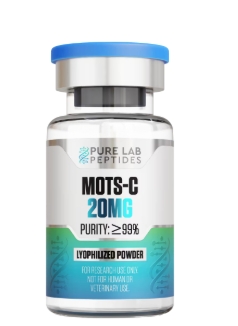
MOTS-C 20mg is a research-use-only laboratory material supplied for controlled research workflows, compound characterization, and analytical documentation review. It is manufactured under rigorous quality standards to support consistency, traceability, and batch-specific verification for qualified laboratory settings.
Key Product Details
- Manufactured in accordance with rigorous quality standards to support ≥99% purity, as reflected in batch-specific documentation where available.
- Every batch is third-party analyzed for identity, assay/potency, and sterility documentation where applicable.
- Supplied in lyophilized powder form to help preserve stability throughout transport and storage.
- Produced with lot-level traceability to support research documentation and laboratory recordkeeping.
Research Documentation Context MOTS-C 20mg
- Supports compound characterization in controlled laboratory settings.
- Provides batch-specific identity and purity documentation for research review.
- Allows lot-level traceability across laboratory documentation workflows.
- Supports comparison of product labeling, analytical documentation, and storage information during research planning.
- Supports analytical review of peptide research materials within a strictly laboratory-focused context.
Specifications and Documentation
- Certificate of Analysis: Available with batch-specific documentation where applicable.
- Material Safety Data Sheet: Coming Soon.
- Handling and Storage Instructions: Coming Soon.
- Product Form: Lyophilized powder.
- Purity Specification: ≥99% purity.
- Intended Use: Laboratory research use only.
MOTS-C 20mg is intended strictly for laboratory research use only. This product is not intended for human or animal consumption, therapeutic use, diagnostic use, clinical use, veterinary use, or as a food, drug, cosmetic, dietary supplement, or household product.
Research Studies:
- Facilitates AMPK activation by inhibiting the folate cycle and inducing AICAR accumulation assays
- Supports investigation into stress-induced nuclear translocation and antioxidant response element gene expression
- Enables research on GLUT4 translocation and fatty acid oxidation in metabolic homeostasis models
- Useful for evaluating myostatin inhibition through the AKT-FOXO1 and mTORC2 signaling pathways




Reviews
There are no reviews yet.